
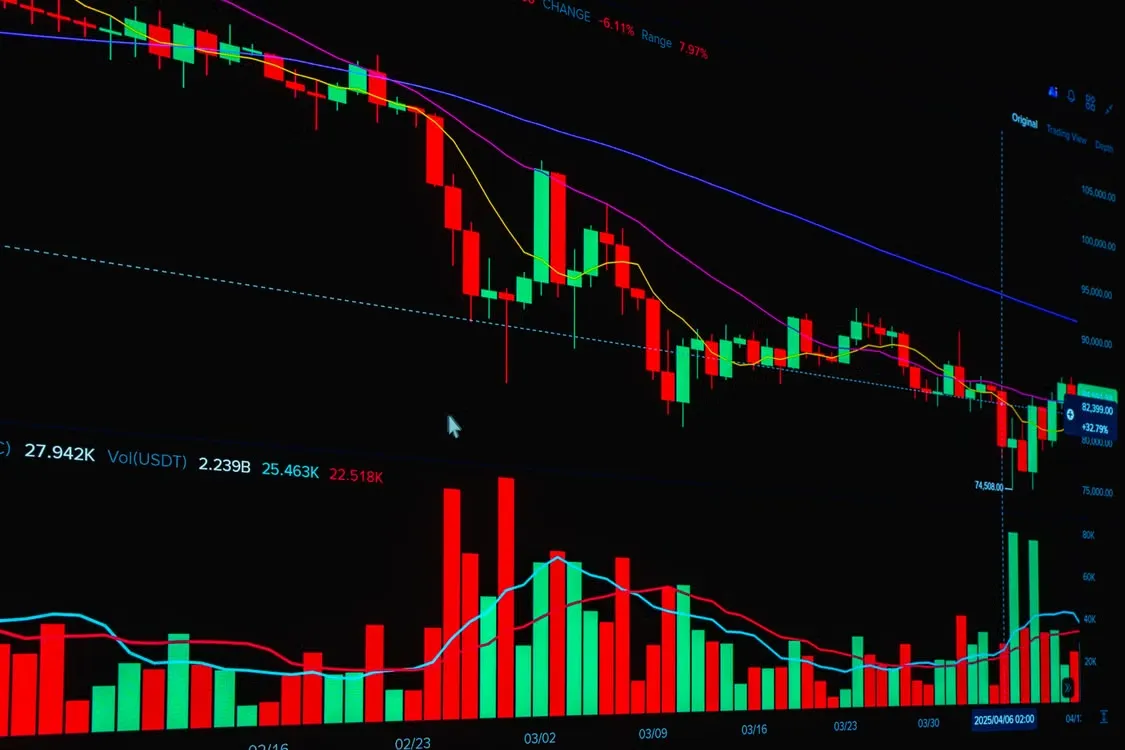
Financial markets rarely move in complete isolation. A change in interest rates may influence currencies, stock indices, commodities, and digital assets at the same time. Traders who study these relationships can develop a broader understanding of market behavior. Even when reviewing an investment portfolio, examining how different assets respond to shared economic developments can reveal risks that are not immediately visible.
Market correlation describes the relationship between price movements in different financial instruments. Understanding these connections is useful because holding several positions does not necessarily mean spreading risk effectively. Different instruments may react similarly during periods of economic uncertainty, creating unexpected exposure.
Understand Connections Between Financial Markets
Correlation measures how closely two assets move in relation to each other. Positive correlation indicates that prices often move in the same direction, while negative correlation suggests that they frequently move in opposite directions. Weak correlation means their movements have a less consistent relationship.
These relationships are not permanent. Economic conditions, investor expectations, and market liquidity can change how assets behave. Traders should therefore examine recent market information instead of assuming that relationships observed in the past will continue indefinitely.
Examine Exposure Before Selecting Accounts
Trading accounts may offer access to numerous instruments, making it possible to maintain positions across different financial markets. However, the availability of multiple assets does not automatically create meaningful diversification. Several positions may still depend on similar economic developments.
When comparing best brokerage accounts, traders should examine instrument availability, account conditions, and risk-management features rather than relying on rankings alone. Understanding how different positions interact is equally important. Account features cannot prevent losses when several markets decline together.
Recognize How Currency Movements Spread
Currency values influence international trade, commodity pricing, and financial investment decisions. Changes in the US dollar, for example, may affect instruments priced in dollars while also influencing businesses that earn revenue in different currencies.
However, these effects are not always straightforward. A stronger currency may benefit certain companies while creating difficulties for others. Traders should investigate the specific economic circumstances behind a movement instead of assuming that every instrument will respond predictably.
Study Relationships During Economic Uncertainty
Market correlations sometimes become more pronounced during periods of financial stress. Investors may reduce exposure across several asset classes simultaneously, causing instruments that previously behaved differently to move in similar directions.
This situation can challenge trading strategies built around diversification. A collection of unrelated-looking positions may still experience losses together. Reviewing overall exposure before major economic announcements can help traders understand where concentrated risks might exist.
Avoid Mistaking Correlation For Causation
Two financial instruments may move together without one directly causing the other to change. Their prices could be responding to the same economic announcement, investor sentiment, or broader financial development.
Traders should investigate potential explanations before interpreting a historical relationship as a trading signal. Statistical patterns can provide useful observations, but they do not establish certainty. Decisions based entirely on correlation may become unreliable when underlying market conditions change.
Monitor Commodities And Currency Relationships
Commodity prices can influence currencies associated with countries that produce or export important natural resources. Changes in oil, metals, and agricultural markets may affect expectations about economic growth, trade balances, and government revenue.
Nevertheless, these relationships involve numerous variables. Domestic interest rates, political developments, and global demand can influence currencies independently of commodity prices. A balanced analysis considers several factors rather than expecting one commodity movement to determine a currency’s direction.
Calculate Combined Risk Across Positions
Traders sometimes assess the risk of each position separately while overlooking their combined exposure. Two individually manageable trades may create substantial overall risk when both respond to the same market event.
Position sizing should therefore consider the entire account rather than isolated transactions. This becomes especially important with leveraged CFDs, where adverse price movements can generate rapid losses. Protective orders may reduce certain risks but cannot guarantee execution at a selected price.
Review Correlations As Conditions Evolve
Market relationships change as economic policies, investor behavior, and trading conditions develop. Reviewing correlations periodically helps traders identify whether their assumptions remain reasonable.
A trading journal can record significant market events and how different instruments responded. Over time, these observations may improve risk awareness. However, historical relationships should support broader research rather than become automatic instructions for opening positions.
Conclusion
Understanding market correlations provides a more complete perspective on financial risk. Currency movements, commodity prices, and equity markets may respond to shared economic influences, particularly during uncertain periods. Educational resources available through tradewill.com can support further exploration of financial instruments and market behavior. However, correlation analysis cannot predict future prices or guarantee effective diversification. Traders should evaluate combined exposure, understand leverage, and maintain realistic expectations when making decisions across interconnected financial markets.


